
Select Your Region
Region-Based Optimized Content
How to Enhance the Buying Experience for Custom Promo Products
Learn how businesses can improve the buying experience for custom promo products with personalization, smooth ordering, clear communication, and customer-focused design.

Jaswinder Singh
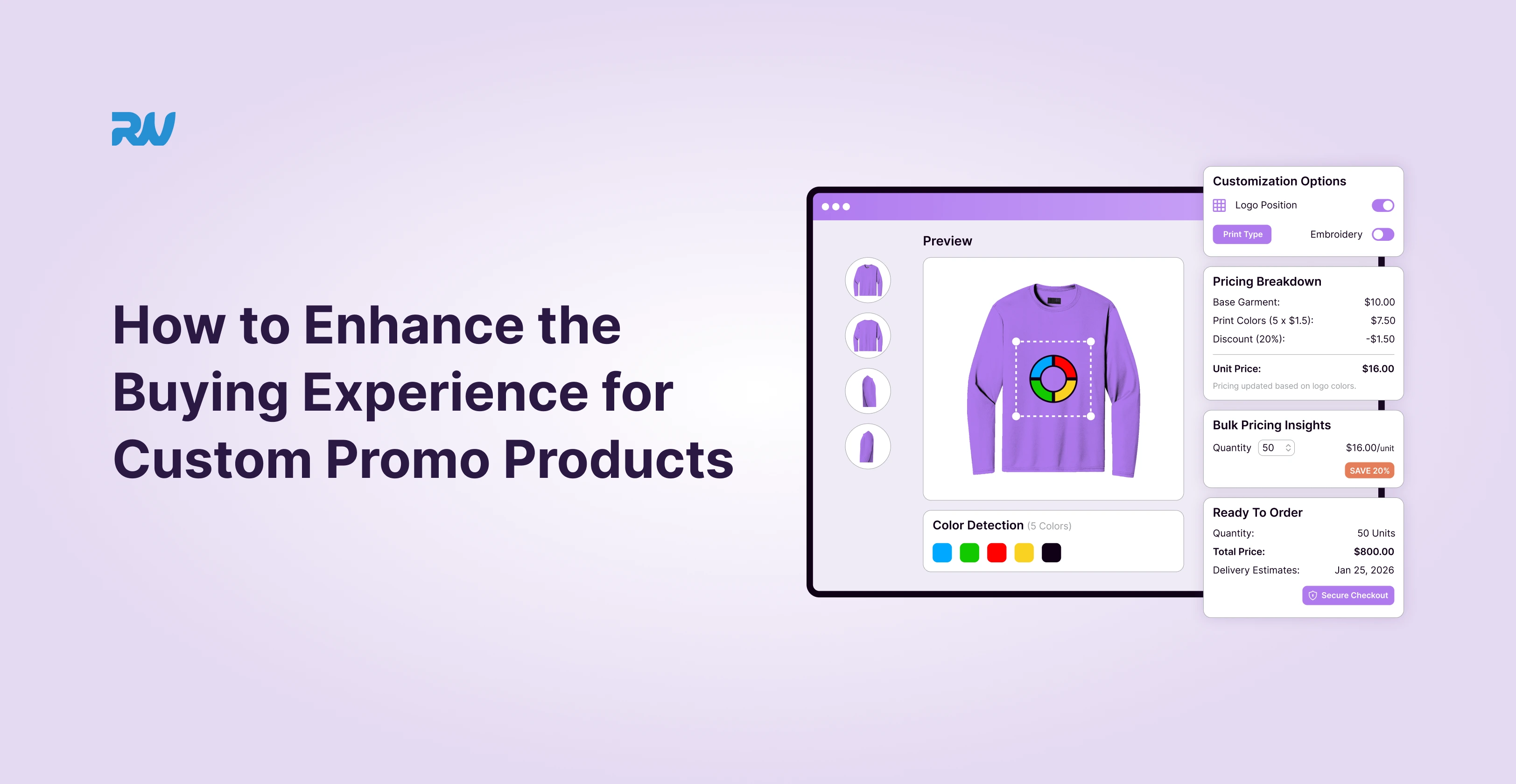
In today's competitive landscape, simply offering custom promotional products isn't enough. Businesses must prioritize a seamless, intuitive, and engaging buying journey to convert browsers into loyal customers. The complexity of customization, coupled with the desire for unique branding, often creates friction points that deter potential buyers. This article explores how modern web technologies, strategic design, and smart automation can dramatically enhance the buying experience for custom promo products, leading to higher satisfaction, fewer revisions, and increased sales.
The Evolving Landscape of Custom Product Sales
Customers today expect more than just a product; they demand an experience. This is especially true for custom promotional items, where decisions involve design, quantity, material, and branding. Traditional eCommerce platforms often fall short, struggling to provide real time visualization, dynamic pricing, and a truly personalized journey. This gap highlights a critical opportunity for businesses to leverage advanced solutions to meet and exceed these evolving expectations.
Understanding Customer Frustrations in Customization
The journey to purchase custom promo products is often fraught with challenges. Customers frequently encounter:
Lack of Visualization: Inability to see how their logo or design will look on the actual product before purchase.
Complex Customization Tools: Clunky, non intuitive interfaces that make design difficult and frustrating.
Opaque Pricing: Hidden costs, setup fees, and quantity based discounts that are not clearly communicated upfront.
Slow Proofing Process: Manual back and forth for design approvals, delaying orders.
Limited Personalization: Generic options that don't allow for unique branding expressions.
Addressing these pain points is fundamental to creating a superior buying experience.
Key Strategies to Enhance the Buying Experience for Custom Promo Products
Transforming the custom promo product buying journey requires a multi faceted approach, integrating technology, user experience design, and efficient workflows. Here are the core strategies: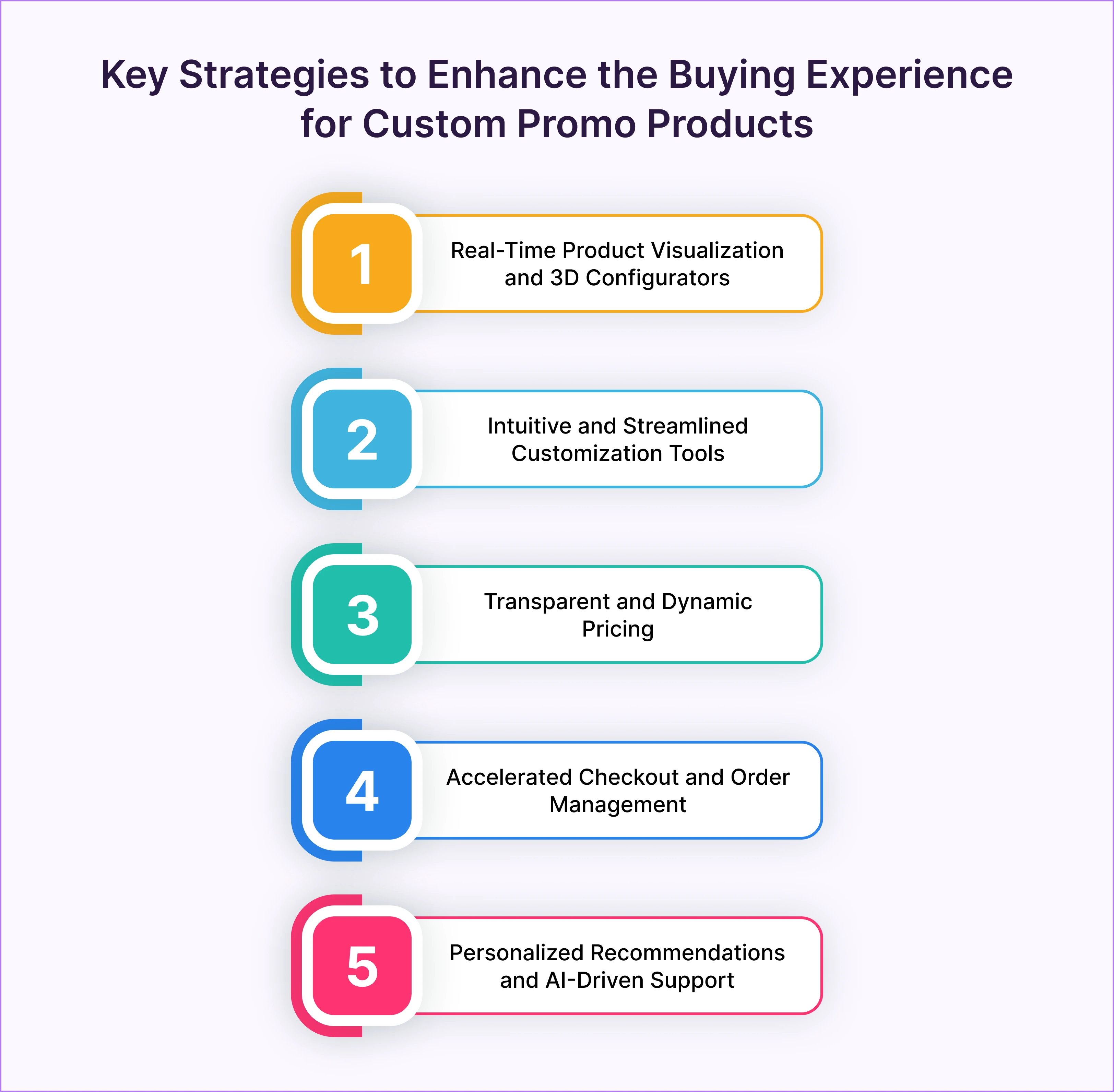
1. Real Time Product Visualization and 3D Configurators
The most significant hurdle in buying custom products online is the inability to "try before you buy." Real time product visualization tools and 3D configurators bridge this gap, allowing customers to see their designs rendered instantly on the chosen product.
Interactive Design Previews: Customers can upload logos, select colors, add text, and see changes applied immediately to a high fidelity image or 3D model of the product. This eliminates guesswork and builds confidence.
Multiple Angles and Zoom: Enable users to rotate, zoom, and view the customized product from various perspectives, mimicking a physical inspection.
Material and Texture Representation: Advanced configurators can accurately display how designs interact with different materials (e.g., embroidery on fabric, engraving on metal, print on plastic).
Example: A customer designing a custom T shirt can upload their company logo, choose the shirt color and size, and instantly see a photorealistic preview of the final product, including how the logo sits on the fabric.
2. Intuitive and Streamlined Customization Tools
The customization interface itself must be user friendly, guiding customers through the process without overwhelming them. Simplicity and clarity are paramount.
Drag and Drop Functionality: Easy placement and resizing of design elements.
Pre-Set Templates and Design Libraries: Offer a range of editable templates, fonts, and clip art to assist customers who may not have their own designs.
Validation and Error Checking: Provide instant feedback on design limitations (e.g., image resolution too low, text exceeding print area).
Progress Indicators: Clearly show customers where they are in the customization process and what steps remain.
Leveraging a Headless CMS here can allow for dynamic content delivery of templates and design assets, ensuring that customization options are always fresh and easily managed.
3. Transparent and Dynamic Pricing
Hidden costs are a major source of frustration. A clear, dynamic pricing model builds trust and prevents cart abandonment.
Instant Price Updates: As customers customize a product (e.g., change quantity, add colors, select premium features), the price should update in real time.
Detailed Cost Breakdown: Clearly itemize all costs, including product base price, customization fees (e.g., per-color print, embroidery setup), quantity discounts, and shipping.
Volume Based Pricing Tiers: Display a clear table or graph showing how unit price decreases with higher quantities.
Integrating with a robust eCommerce backend allows for complex pricing logic to be handled seamlessly, providing accurate quotes instantly.
4. Accelerated Checkout and Order Management
Once a customer has customized their product, the final steps of purchase and fulfillment should be as smooth as possible.
Guest Checkout Options: Reduce friction by allowing purchases without mandatory account creation.
One Page Checkout: Minimize steps and form fields to speed up the process.
Multiple Payment Gateways: Offer diverse payment options (credit cards, PayPal, Apple Pay, etc.) for convenience.
Automated Proofing and Approval: Implement digital proofing systems that allow customers to approve designs online, significantly reducing the manual back and forth. This can be greatly enhanced by AI automation to flag common design errors or suggest improvements.
Clear Order Tracking: Provide customers with real time updates on their order status, from production to shipping, accessible via a user friendly portal or automated notifications.
5. Personalized Recommendations and AI Driven Support
Going beyond basic customization, personalization can significantly enhance the buying experience for custom promo products. AI plays a crucial role here.
Intelligent Product Suggestions: Based on browsing history, past purchases, or design choices, recommend complementary products or alternative options. For instance, if a customer is designing custom pens, suggest branded notebooks or lanyards.
AI-Powered Design Assistance: Implement AI agents that can offer design tips, suggest color palettes, or even help optimize logo placement for different products.
Chatbots for Instant Support: Deploy AI driven chatbots to answer common questions about materials, production times, or design guidelines, providing instant support 24/7. This frees up human customer service for more complex inquiries.
These advanced features are often best implemented on modern, flexible architectures like Jamstack websites, which can integrate with various APIs for AI and eCommerce functionalities.
Leveraging Modern Architectures for Superior Experiences
To implement these strategies effectively, businesses need a robust, scalable, and flexible digital infrastructure. This is where modern web architectures like Headless CMS and Jamstack shine.
Headless CMS for Content Flexibility
A Headless CMS decouples the content management backend from the frontend presentation layer. This offers unparalleled flexibility:
Omnichannel Delivery: Content (product descriptions, customization options, design templates) can be delivered to any frontend experience—website, mobile app, in store kiosk ensuring consistency.
API First Approach: All content is accessible via APIs, making it easy to integrate with real time configurators, pricing engines, and AI tools.
Developer Freedom: Frontend developers can use their preferred frameworks (React, Vue, Angular) to build highly interactive and dynamic user interfaces without being constrained by a monolithic CMS.
This separation allows businesses to rapidly innovate and update their customization tools and product offerings without affecting the core content management system.
Jamstack for Performance and Scalability
Jamstack (JavaScript, APIs, Markup) is an architectural approach that emphasizes pre-rendering and serving static assets, enhancing performance, security, and scalability.
Blazing Fast Load Times: Pre-built static sites load almost instantly, crucial for keeping users engaged, especially with complex configurators.
Enhanced Security: Fewer servers and databases reduce attack vectors.
Lower Hosting Costs: Serving static files is generally more cost effective than dynamic server side rendering.
Seamless Integrations: Jamstack sites rely heavily on APIs for dynamic features (e.g., eCommerce, payment gateways, real time configurators), making it easy to connect best of breed services.
Combining Headless CMS with Jamstack creates a powerful synergy, allowing businesses to manage rich content and deliver lightning fast, highly interactive custom product experiences.
Practical Examples and Tools
3D Product Configurator Platforms: Solutions like Threekit, Configure One, or custom built WebGL applications can provide real time 3D rendering and customization.
eCcommerce Platforms: Shopify Plus, BigCommerce, or custom eCommerce solutions built on frameworks like Next.js or Gatsby (for Jamstack) can handle product catalogs, pricing, and checkout.
Headless CMS: Contentful, Strapi, Sanity.io, or DatoCMS for managing product data, design templates, and marketing content.
AI & Automation Tools: Integrations with platforms like OpenAI (for natural language processing in chatbots or design suggestions), Zapier (for workflow automation), or custom AI agents for proofing.
Payment Gateways: Stripe, PayPal, Braintree for secure and diverse payment options.
CRM/ERP Integration: Connecting the eCommerce platform with CRM (e.g., Salesforce) and ERP systems (e.g., SAP) ensures seamless order processing, inventory management, and customer relationship tracking.
The key is to select tools that offer robust APIs and can integrate harmoniously within a modern, composable architecture.


Hi, my name is Jaswinder, let's talk about your business needs.
I will do my best to find a reliable solution for you!
Conclusion
The journey to purchase custom promotional products no longer has to be a maze of confusion and frustration. By embracing real-time visualization, intuitive customization, transparent pricing, accelerated workflows, and intelligent personalization, businesses can dramatically enhance the buying experience for custom promo products. These improvements not only lead to higher conversion rates and fewer order revisions but also cultivate stronger customer loyalty and brand advocacy.
At RW Infotech, we specialize in building these transformative digital experiences. With our expertise in Headless Solutions, Jamstack website development, and AI automation, we help businesses create cutting edge platforms that deliver unparalleled customization capabilities and seamless buying journeys. From integrating advanced 3D configurators to optimizing performance and streamlining backend operations, we empower our clients to offer a truly modern, friction free experience that sets them apart in the competitive custom product market. Let us help you architect a future where your customers don't just buy a product—they craft an experience.
Frequently Asked Questions
Find answers to the most common questions about Enhance the Buying Experience for Custom Promo Products.
AI plays a pivotal role in several areas: it can power intelligent product recommendations based on user behavior and design choices, offer AI driven design assistance (e.g., suggesting optimal logo placements, color palettes), automate parts of the proofing process by flagging common errors, and provide instant customer support through advanced chatbots. These AI capabilities personalize the journey, reduce manual effort, and help customers make informed decisions faster.
A Headless CMS provides immense flexibility by separating content from presentation. For custom promo products, this means product data (materials, colors, sizes), customization options, and design templates can be managed centrally and delivered via APIs to any frontend. This allows businesses to easily update product lines, introduce new customization features, and integrate with diverse tools like 3D configurators or pricing engines without complex re-platforming, ensuring a consistent and dynamic experience across all touchpoints.
Absolutely. While Jamstack is known for static site generation, its strength lies in its ability to integrate dynamic functionalities via APIs. For complex customization, a Jamstack frontend (e.g., built with Next.js or Gatsby) can leverage APIs from a Headless CMS for product data, a dedicated 3D configurator for real time visualization, and an eCommerce API for checkout and order processing. This architecture delivers incredible speed and security while still supporting highly interactive and dynamic user experiences for customization.
Common pitfalls include overcomplicating the user interface, leading to frustration; failing to provide real time visual feedback, which creates uncertainty; neglecting transparent pricing, causing cart abandonment; and overlooking mobile responsiveness, alienating a large segment of users. It's crucial to conduct thorough user testing, prioritize intuitive design, ensure robust API integrations, and continuously gather feedback to refine the customization experience.
Success can be measured through several key performance indicators (KPIs): increased conversion rates, reduced cart abandonment rates, fewer design revision requests, higher average order value, improved customer satisfaction scores (CSAT), and positive feedback related to the customization process. Tracking these metrics provides concrete evidence of how an enhanced buying experience translates into tangible business benefits.
News & Insights
We like to share our thoughts on topics we find inspiring. Explore our news and insights.
.png)
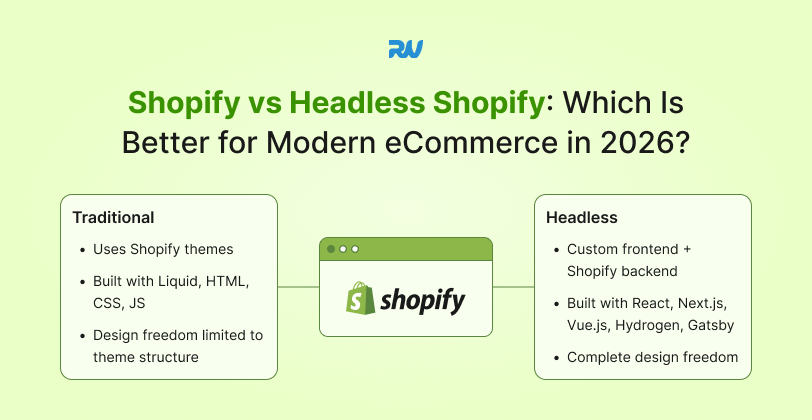
Shopify vs Headless Shopify: Which Is Better for Modern eCommerce in 2026?
A detailed comparison of Shopify vs Headless Shopify for modern eCommerce in 2026. Explore performance, scalability, customization, SEO, cost, and development complexity to choose the best platform architecture for your business growth.

REST vs GraphQL in Builder.io Content API: A Complete Comparison Guide
A complete comparison guide to REST vs GraphQL in Builder.io Content API. Learn performance differences, caching strategies, developer experience, real-world use cases, and how to choose the right API approach for scalable, high-performance digital experiences.