
Select Your Region
Region-Based Optimized Content
Shopify vs Headless Shopify: Best eCommerce Choice in 2026
Compare Shopify vs Headless Shopify in 2026. Learn performance, cost, SEO, scalability, and UX differences to choose the right eCommerce architecture.


Choosing the right eCommerce platform is a critical strategic decision for businesses aiming for sustained growth and market relevance. As the digital landscape evolves, the traditional monolithic approach of platforms like Shopify faces new challenges and opportunities. Concurrently, the headless commerce architecture has emerged as a powerful alternative, promising enhanced flexibility and performance. This article provides a comprehensive comparison between traditional Shopify and Headless Shopify, guiding business owners, product leaders, and technical teams in selecting the optimal solution for their online store in 2026 and beyond.
We will examine how these two models differ across key areas such as performance, customization, scalability, development complexity, cost implications, and future readiness. Understanding these distinctions is crucial for making an informed decision that aligns with your business objectives, target audience needs, and long-term strategic vision.
Understanding Traditional Shopify
Traditional Shopify operates as a monolithic platform, meaning the front-end (what customers see) and the back-end (order processing, inventory management, data) are tightly coupled. It provides an all-in-one solution, offering a comprehensive suite of features out-of-the-box, including hosting, payment gateways, marketing tools, and a theme-based design system.
This integrated approach simplifies setup and management, making it highly accessible for businesses without extensive technical resources. Merchants can quickly launch an online store using pre-built themes and a user-friendly admin interface. Shopify's ecosystem, including its App Store, further extends its capabilities, allowing for various integrations and functionalities without complex custom development.
Key Characteristics of Traditional Shopify:
Integrated Stack: Front-end and back-end are combined, simplifying initial setup and ongoing maintenance.
Theme-Based Design: Customization is primarily achieved through themes and Liquid templating, offering a balance of design flexibility and ease of use.
Managed Hosting: Shopify handles all hosting, security, and infrastructure, reducing operational overhead for merchants.
Extensive App Store: A vast marketplace of apps extends functionality, often without requiring custom code.
Rapid Deployment: New stores can be launched quickly, making it ideal for startups and businesses prioritizing speed to market.
Understanding Headless Shopify
Headless Shopify decouples the front-end presentation layer from the back-end commerce engine. Shopify still serves as the robust back-end, managing products, orders, customers, and payments through its APIs (Storefront API, Admin API). However, the front-end, or "head," is built independently using modern web technologies like React, Vue, Next.js, or Gatsby.
This architectural separation provides unparalleled flexibility. Businesses can create highly customized, unique user experiences across any channel—web, mobile app, IoT devices, or even in-store kiosks—all powered by the same Shopify back-end. The front-end can be optimized for specific performance goals, design requirements, and integration needs without being constrained by Shopify's default templating system.
Key Characteristics of Headless Shopify:
Decoupled Architecture: Front-end and back-end operate independently, communicating via APIs.
Frontend Freedom: Developers have complete control over the user interface and experience, using any modern framework.
Omnichannel Readiness: The same back-end can power multiple front-ends, enabling consistent experiences across diverse touchpoints.
Enhanced Performance Potential: Custom front-ends can be highly optimized for speed, leveraging techniques like static site generation (SSG) or server-side rendering (SSR).
Complex Integrations: Easier to integrate with third-party systems, PIMs, CRMs, or custom applications without impacting the core commerce platform.
Shopify vs Headless Shopify: A Strategic Comparison for Modern eCommerce in 2026
The choice between traditional Shopify and Headless Shopify hinges on several strategic factors. This comparison evaluates their differences across critical dimensions relevant to modern eCommerce success.
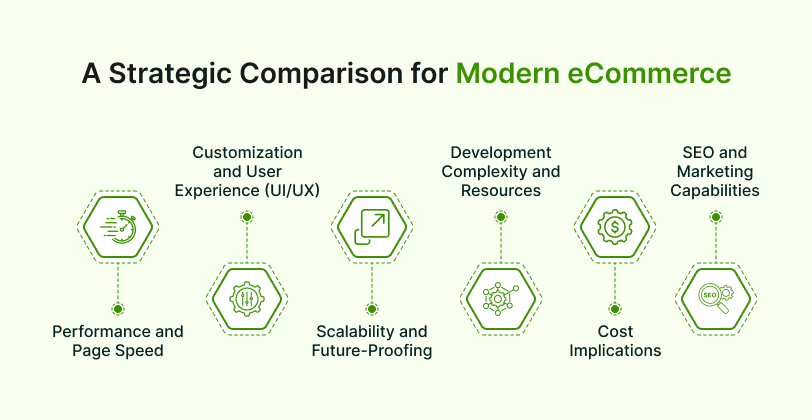
Performance and Page Speed
Traditional Shopify:While Shopify continually optimizes its platform, traditional stores are bound by its theme architecture and server-side rendering. Performance is generally good for most users, but achieving sub-second load times or perfect Core Web Vitals scores can be challenging, especially with numerous apps or complex themes. The tight coupling means front-end optimizations are limited by the platform's underlying structure.
Headless Shopify:Offers significant advantages in performance. By building a custom front-end with frameworks like Next.js or Gatsby, developers can implement advanced optimization techniques such as static site generation (SSG), incremental static regeneration (ISR), image optimization, and aggressive caching. This results in superior page load speeds, better Core Web Vitals, and a smoother user experience, which directly impacts SEO rankings and conversion rates. For brands where every millisecond counts, headless is the clear leader.
Customization and User Experience (UI/UX)
Traditional Shopify:Customization is primarily theme-based. While themes offer flexibility through sections, blocks, and Liquid code, there are inherent limitations. Major structural changes or highly unique interactive elements often require workarounds or become prohibitively complex. This can lead to a uniform look across many Shopify stores, potentially hindering brand differentiation.
Headless Shopify:Provides complete creative freedom. Developers can design and implement any UI/UX vision without constraints. This allows for highly personalized customer journeys, unique brand expressions, and cutting-edge interactive features that are impossible within a traditional theme. For brands prioritizing a distinct identity and a premium user experience, headless is indispensable.
Scalability and Future-Proofing
Traditional Shopify:Shopify is inherently scalable in terms of transaction volume and infrastructure, handling peak traffic effectively. However, its scalability for complex business logic, diverse sales channels, or highly specific integration needs can be limited. Adding new functionalities often means relying on apps, which can introduce technical debt or performance bottlenecks.
Headless Shopify:Excels in scalability and future-proofing. The decoupled architecture allows businesses to scale the front-end and back-end independently. As new technologies emerge (e.g., AI-powered personalization, voice commerce, AR/VR experiences), a headless front-end can be adapted or entirely replaced without touching the core commerce engine. This modularity ensures long-term agility and the ability to embrace emerging trends, making it ideal for high-growth brands or enterprises with evolving requirements.
Development Complexity and Resources
Traditional Shopify:Relatively low development complexity. Merchants can often set up and manage stores with minimal technical expertise. Development primarily involves theme customization (Liquid, HTML, CSS, JavaScript) and app configuration. This makes it accessible for small teams or businesses with limited development budgets.
Headless Shopify:Significantly higher development complexity. Requires experienced front-end developers proficient in modern JavaScript frameworks (e.g., React, Vue, Next.js) and API integrations. Building a headless store involves architectural decisions, custom development, and managing a separate hosting environment for the front-end. This translates to higher initial development costs and ongoing maintenance requirements, necessitating a dedicated development team or partnership with an agency like RW Infotech.
Cost Implications
Traditional Shopify:Generally lower upfront and ongoing costs. Subscription fees are predictable, and theme/app purchases are often one-time or recurring at a manageable rate. Development costs are lower due to simpler implementation.
Headless Shopify:Higher overall costs. Initial development is more expensive due to the need for custom front-end development. Ongoing costs include hosting for the custom front-end, potential API usage fees, and the need for skilled developers for maintenance and feature enhancements. While the ROI can be substantial in terms of performance and flexibility, the investment is higher.
SEO and Marketing Capabilities
Traditional Shopify:Provides built-in SEO features, including sitemaps, basic meta tag control, and URL structures. Performance, however, can sometimes be a limiting factor for top-tier SEO rankings compared to highly optimized custom sites. Marketing integrations are typically handled via apps.
Headless Shopify:Offers superior SEO control. Developers have full control over HTML structure, metadata, schema markup, and content delivery, allowing for granular optimization. The inherent performance benefits (faster page loads, better Core Web Vitals) directly contribute to improved search engine rankings. Integrating advanced marketing tools or A/B testing platforms is also more straightforward and flexible.


Hi, my name is Jaswinder, let's talk about your business needs.
I will do my best to find a reliable solution for you!
Decision Criteria: When to Choose Which
Making the right choice between traditional and Headless Shopify requires a clear understanding of your business needs, resources, and long-term vision.
Choose Traditional Shopify if:
You are a small to medium-sized business (SMB) or a startup: Prioritizing speed to market and lower initial costs.
Your product catalog is straightforward: You don't require highly complex product configurations or unique display methods.
Your design requirements are met by existing themes: You are comfortable working within Shopify's theme ecosystem and don't need extreme UI/UX customization.
You have limited technical resources: Your team lacks experienced front-end developers for custom builds.
Your primary sales channel is a single online store: You don't have immediate plans for extensive omnichannel expansion across diverse touchpoints.
Your budget is constrained: You need a cost-effective solution with predictable expenses.
Choose Headless Shopify if:
You are a high-growth brand or enterprise: Requiring ultimate flexibility, performance, and scalability for future expansion.
You demand a unique, cutting-edge user experience: Differentiating your brand through highly customized UI/UX is a top priority.
You have complex product catalogs or custom business logic: Needing specific ways to display products, integrate with PIMs, or manage intricate workflows.
You plan for an omnichannel strategy: Delivering consistent experiences across web, mobile apps, IoT, in-store, and other digital touchpoints.
Performance is critical for conversions and SEO: You require blazing-fast page loads and superior Core Web Vitals.
You have a dedicated development team or partner: Possessing the technical expertise and resources for custom front-end development and ongoing maintenance.
You need to integrate with multiple third-party systems: Requiring seamless connections with CRMs, ERPs, custom applications, or advanced marketing tools.
The Role of RW Infotech in Your eCommerce Journey
Navigating the complexities of modern eCommerce, especially when considering a transition to headless architecture, requires specialized expertise. RW Infotech, with its extensive experience in Headless Solutions and Jamstack website development, is uniquely positioned to assist businesses in making this strategic shift.
Our team provides end-to-end services, from initial consultation and architectural design to custom front-end development using frameworks like Next.js and Gatsby, seamless Shopify API integration, and ongoing performance optimization. We help businesses unlock the full potential of headless commerce, delivering high-performance, scalable, and future-proof digital storefronts that drive conversions and enhance brand loyalty. Whether you are building a new store or migrating an existing one, our strategic guidance ensures a successful implementation tailored to your specific business objectives.
Conclusion
The decision between traditional Shopify and Headless Shopify is not about which platform is inherently "better," but rather which architecture aligns more closely with your specific business goals, technical capabilities, and long-term vision for modern eCommerce in 2026. Traditional Shopify remains an excellent choice for businesses prioritizing ease of use, rapid deployment, and cost-effectiveness within a standardized framework. For brands seeking unparalleled performance, complete design freedom, omnichannel capabilities, and future-proof scalability, Headless Shopify offers a superior, albeit more complex and resource-intensive, solution.
Evaluate your current needs, anticipate future demands, and realistically assess your available resources. This strategic assessment will clarify whether the all-in-one simplicity of traditional Shopify or the modular power of Headless Shopify is the right foundation for your eCommerce success.
Frequently Asked Questions
Find answers to the most common questions about Shopify vs Headless Shopify.
Headless Shopify can significantly improve SEO by allowing for superior page speed, better Core Web Vitals, and complete control over HTML structure, metadata, and schema markup. This granular control enables developers to implement advanced SEO strategies that are often limited in traditional theme-based platforms.
For Headless Shopify, common front-end development technologies include modern JavaScript frameworks such as React, Vue.js, Next.js, and Gatsby. These frameworks enable the creation of highly performant, dynamic, and customized user interfaces that consume data via Shopify's APIs.
While Headless Shopify offers immense power, its higher development complexity and cost typically make it less suitable for very small businesses with limited budgets or technical resources. It generally provides better ROI for high-growth brands, enterprises, or businesses with unique design and performance requirements.
The main risks include increased initial development costs, the need for specialized front-end development expertise, potential integration complexities, and the requirement for robust ongoing maintenance. Careful planning and experienced partners are crucial to mitigate these risks.
RW Infotech specializes in Headless Solutions and Jamstack development. We provide expert consultation, custom front-end development using modern frameworks, seamless Shopify API integration, and performance optimization to help businesses build high-performing, scalable, and unique Headless Shopify stores tailored to their strategic objectives.
News & Insights
We like to share our thoughts on topics we find inspiring. Explore our news and insights.
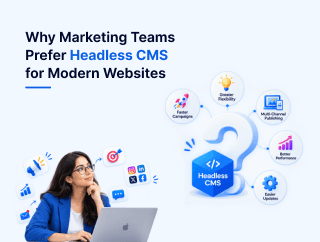
Why Marketing Teams Prefer Headless CMS for Modern Websites
Learn how headless CMS helps marketing teams manage content independently, launch campaigns faster, improve collaboration, personalize customer experiences, and deliver content across multiple channels.
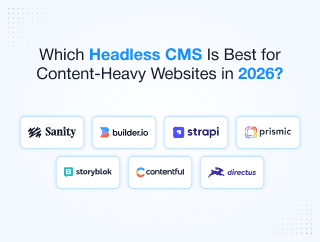
Which Headless CMS Is Best for Content-Heavy Websites in 2026?
Discover the best headless CMS platforms for content-heavy websites in 2026. Compare Sanity, Strapi, Contentful, Storyblok, Directus, and other leading options.