
Select Your Region
Region-Based Optimized Content
How Headless CMS Bridges the Gap Between Marketing and Development Teams
Discover how Headless CMS bridges the gap between marketing and development teams by improving collaboration, speeding up content delivery, and enabling scalable digital experiences.

Jaswinder Singh
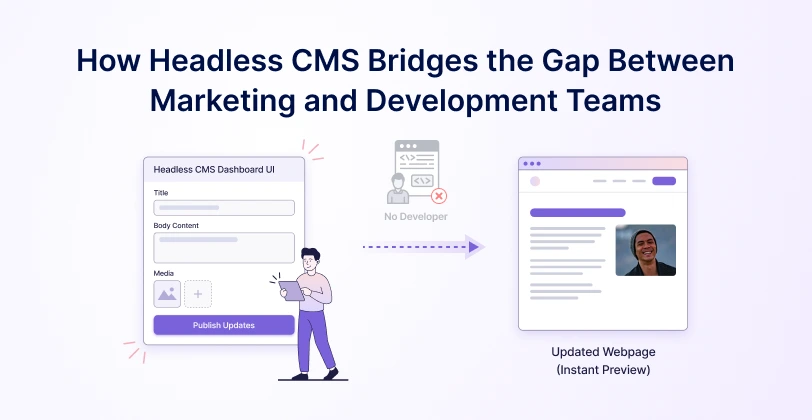
In today's fast paced digital landscape, the ability to deliver timely and relevant content is paramount. However, traditional content management systems often create friction between marketing and development teams, leading to bottlenecks, delayed campaigns, and missed opportunities. Marketing teams require agility to launch campaigns and update content quickly, while development teams need stable environments to build and maintain core features. This inherent tension can hinder digital initiatives and impact overall business velocity.
A headless CMS offers a strategic solution by decoupling the content layer from the presentation layer. This architectural shift empowers marketing teams with direct control over content creation and distribution across various channels, reducing their dependency on developers for routine updates. Simultaneously, it frees development teams to focus on innovation, performance, and the underlying infrastructure, rather than being constantly pulled into content-related tasks. Understanding how a headless CMS bridges this gap is crucial for organizations aiming to optimize their digital operations and foster greater collaboration.
The Foundational Shift: Decoupling Content and Presentation
The core principle of a headless CMS is the complete separation of the content repository (the "body") from the presentation layer (the "head"). Unlike monolithic CMS platforms where content management and content delivery are tightly coupled, a headless system stores content as raw data and delivers it via APIs. This fundamental architectural change has profound implications for how marketing and development teams interact and operate.
For development teams, this decoupling means they are no longer constrained by the frontend limitations or templating languages of a traditional CMS. They can choose any frontend framework, programming language, or technology stack that best suits the project requirements, whether it's React, Vue, Angular, or even native mobile applications. This flexibility accelerates development cycles, improves performance, and allows for greater innovation in user experience. Developers can build robust, scalable applications knowing that content can be seamlessly integrated from the headless CMS.
Marketing teams benefit from this separation by gaining unparalleled flexibility in content distribution. Content created once can be published anywhere websites, mobile apps, IoT devices, smart displays, and social media platforms without requiring developers to re-engineer the content for each channel. This "create once, publish everywhere" (COPE) approach is a significant advantage in an omnichannel world, ensuring consistent messaging and brand experience across all touchpoints.
Empowering Marketers with Content Autonomy
One of the most significant advantages of a headless CMS for marketing teams is the increased autonomy it provides. Marketers can manage content workflows, create new pages, update calls-to-action (CTAs), and launch campaigns without direct developer intervention for every change. This independence significantly speeds up time-to-market for digital initiatives.
Intuitive Content Authoring: Modern headless CMS platforms often include rich visual editing interfaces, sometimes referred to as "visual editors" or "page builders." These tools allow marketers to see how their content will appear on the frontend while still interacting with a decoupled content model. This bridges the gap between the structured content approach of headless and the visual needs of marketers, enabling them to design and publish pages efficiently.
Flexible Content Models: Headless CMS platforms excel in defining custom content models. Marketers can work with developers to establish content structures that precisely match their needs, such as a "product page" model with fields for name, description, images, price, and related items. Once these models are defined, marketers can populate them with content independently, ensuring consistency and structured data for various applications.
Faster Campaign Launches: The ability to quickly spin up new landing pages, update promotional content, or A/B test different messaging without relying on development queues is a game-changer for marketing. This agility allows marketing teams to react to market trends, competitor actions, and customer feedback in real-time, optimizing campaign performance and maximizing ROI.
Omnichannel Content Delivery: Marketers can push content to multiple digital touchpoints simultaneously from a single source. This ensures brand consistency and reduces the effort required to manage content across disparate systems. For instance, a new product announcement can be published to the website, mobile app, and in-store displays concurrently, all managed from the same headless interface.
Enabling Developers to Focus on Innovation
While marketing gains autonomy, development teams benefit from a headless CMS by being liberated from content-related maintenance tasks and frontend dependencies. This allows them to allocate their expertise to more strategic, technical endeavors that drive business value.
Technology Stack Freedom: Developers are no longer forced to work within a specific CMS's templating engine or programming language. They can leverage the latest frontend technologies, frameworks (like Next.js for React, Nuxt.js for Vue), and development practices that lead to superior performance, scalability, and developer experience. This freedom fosters innovation and attracts top talent.
API-First Approach: The API-first nature of headless CMS architecture means developers interact with content through well-documented APIs (REST or GraphQL). This simplifies integration with other systems, such as e-commerce platforms, CRM, marketing automation tools, or custom backend services. Developers can consume content programmatically, enabling dynamic and personalized experiences.
Improved Performance and Security: By separating the frontend from the backend, developers can optimize each layer independently. They can implement modern caching strategies, CDNs, and serverless architectures for the frontend, leading to faster load times and enhanced user experience. The content API can also be secured more robustly, reducing attack vectors compared to monolithic systems.
Reduced Maintenance Overhead: With marketers managing content, developers spend less time on routine content updates, bug fixes related to content display, or template modifications. This allows them to focus on building core features, improving system architecture, and implementing complex integrations, contributing to the long-term technical health of the platform.
Strategic Implications for Collaboration and Productivity
The benefits of a headless CMS extend beyond individual team efficiencies, fostering a more collaborative and productive environment for the entire organization. This strategic alignment helps bridge the traditional divide between creative and technical departments.
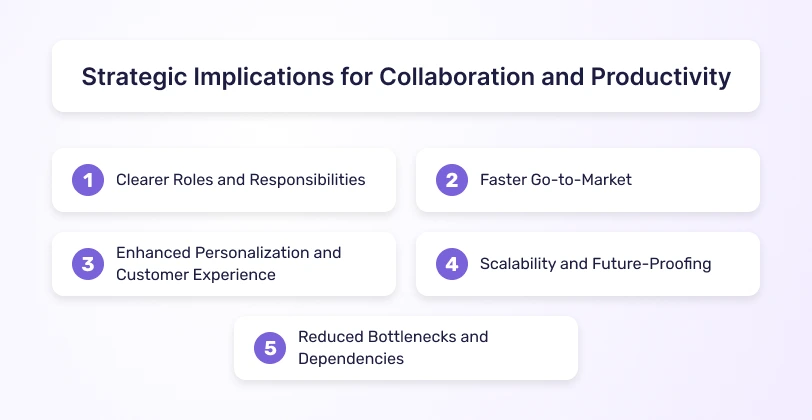 Clearer Roles and Responsibilities: Headless architecture naturally delineates responsibilities. Marketers own the content strategy, creation, and publishing workflows. Developers own the underlying technology, application logic, and infrastructure. This clarity reduces miscommunication and ensures each team can operate within its area of expertise without stepping on toes.
Faster Go-to-Market: The combined agility of both teams results in significantly faster time-to-market for new digital products, features, and campaigns. Marketers can prepare content in parallel while developers build the necessary frontend components. Once the components are ready, content can be published instantly, accelerating product launches and campaign rollouts.
Enhanced Personalization and Customer Experience: With structured content delivered via APIs, developers can more easily implement personalization engines and dynamic content delivery based on user behavior, location, or other attributes. Marketers can then leverage these capabilities to create highly tailored experiences, driving engagement and conversions.
Scalability and Future-Proofing: A headless architecture is inherently more scalable and adaptable to future technological shifts. As new digital channels emerge or existing technologies evolve, the content remains accessible and usable. Developers can integrate new "heads" without disrupting the content management workflows, protecting the organization's investment in content and technology.
Reduced Bottlenecks and Dependencies: The most direct impact on collaboration is the reduction of bottlenecks. Marketers no longer wait for developers to deploy minor content changes, and developers are not interrupted from complex tasks to handle content updates. This streamlined workflow improves overall project velocity and reduces frustration for both teams.
Decision Criteria for Adopting a Headless CMS
While the benefits are compelling, adopting a headless CMS is a strategic decision that requires careful consideration. Organizations should evaluate several factors:
Omnichannel Strategy: Do you need to deliver content to multiple digital touchpoints beyond a traditional website (e.g., mobile apps, smart devices, voice assistants)? If yes, headless provides the necessary flexibility.
Development Team Skillset: Does your development team have experience with modern frontend frameworks, APIs, and building decoupled architectures? The learning curve for a headless setup can be steeper than for a monolithic CMS.
Marketing Team Autonomy Needs: How critical is it for your marketing team to have direct, rapid control over content publishing without developer intervention?
Performance Requirements: Are high performance, fast load times, and scalability critical for your digital properties? Headless architectures often lead to better performance.
Integration Complexity: Do you need to integrate your content management system with numerous other business systems (e-commerce, CRM, ERP, marketing automation)? An API-first headless CMS simplifies these integrations.
Budget and Resources: Headless solutions can sometimes require more upfront development effort and architectural planning, although they often yield long-term savings and flexibility.
Organizations should weigh these criteria against their specific business goals and technical capabilities. For companies with ambitious digital transformation plans, a diverse set of digital touchpoints, and a desire for greater agility, a headless CMS often presents a superior long-term solution.


Hi, my name is Jaswinder, let's talk about your business needs.
I will do my best to find a reliable solution for you!
Conclusion: A Unified Approach to Digital Experience
The adoption of a headless CMS represents more than just a technological upgrade; it signifies a strategic shift towards a more collaborative, agile, and efficient approach to digital experience delivery. By fundamentally separating content from presentation, a headless CMS empowers marketing teams with the autonomy they need to move quickly, while freeing development teams to focus on building robust, high-performance applications. This dual benefit reduces friction, accelerates time-to-market, and fosters a more unified environment where both teams contribute optimally to the organization's digital success.
For businesses seeking to overcome the traditional silos between marketing and development, improve digital agility, and deliver consistent, personalized experiences across all channels, a headless CMS is a critical enabler. It's an investment in future-proofing digital infrastructure and unlocking the full potential of both creative and technical teams.
RW Infotech specializes in implementing headless solutions and facilitating seamless headless CMS migrations. Our expertise ensures that organizations can successfully bridge the gap between their marketing and development teams, leveraging modern architectures to achieve their strategic digital objectives.
Frequently Asked Questions
Find answers to the most common questions about Headless CMS Bridges the Gap Between Marketing and Development Teams.
The primary benefit is increased autonomy. Marketing teams can create, edit, and publish content across various channels without constant reliance on developers, accelerating campaign launches and content updates.
Developers gain freedom to use preferred frontend technologies and frameworks. They focus on building core features and robust APIs, rather than being tied to content-related tasks or a specific CMS's templating system.
Yes, absolutely. Headless CMS platforms are API-first, making it straightforward to integrate with CRM systems, marketing automation platforms, e-commerce solutions, and other business applications through their APIs.
While often associated with large enterprises, many modern headless CMS solutions are scalable and can benefit small to medium businesses that require omnichannel presence, future-proofing, and reduced development bottlenecks.
RW Infotech provides expert services in headless solutions, Jamstack development, and headless CMS migrations. We help organizations design, implement, and optimize decoupled architectures to enhance collaboration and digital agility.
News & Insights
We like to share our thoughts on topics we find inspiring. Explore our news and insights.