
Select Your Region
Region-Based Optimized Content
How Headless CMS Uses APIs to Sync Website & Mobile App Content
Learn how Headless CMS uses APIs to sync website and mobile app content for real-time updates, consistency, and scalable digital experiences.

Jaswinder Singh
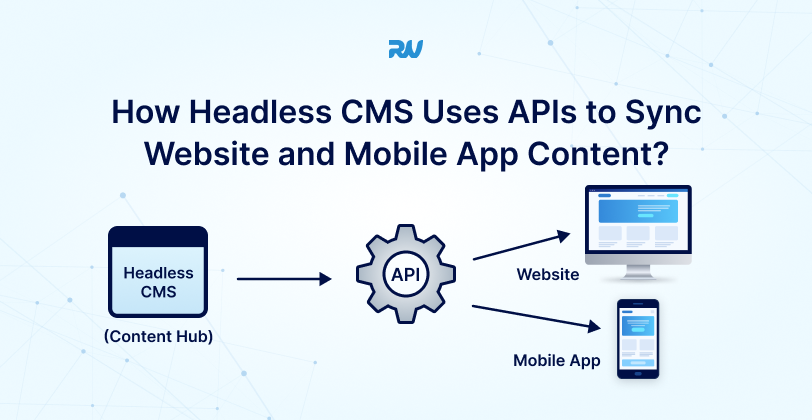
In today's multi-channel digital landscape, businesses must deliver consistent, up-to-date content across various platforms. Managing content for a website and a mobile application simultaneously can be complex, often leading to fragmented user experiences and increased operational overhead. A Headless CMS addresses this challenge by decoupling content management from content presentation, leveraging APIs to synchronize content seamlessly across diverse frontends.
This approach centralizes content creation and management, allowing teams to publish once and distribute everywhere. For product leaders and development teams, understanding how a Headless CMS uses APIs is crucial for building scalable, efficient, and future-proof digital strategies that ensure content consistency and reduce manual effort across web and mobile touchpoints.
The API-Driven Architecture of Headless CMS for Unified Content Delivery
A Headless CMS operates on a fundamental principle: content is stored and managed independently of how it is displayed. This separation is enabled by robust Application Programming Interfaces (APIs), which act as the communication layer between the content repository (the "head" of the CMS) and any frontend application (the "body"). When a business needs to sync website and mobile app content, APIs become the primary mechanism.
Unlike traditional monolithic CMS platforms, which tightly couple content with specific templates and presentation layers, a Headless CMS exposes content through various API types, predominantly RESTful APIs or GraphQL APIs. These APIs allow developers to query, retrieve, and update content programmatically. For a website, a JavaScript framework might fetch content via an API; for a mobile app, native iOS or Android code would make similar API calls. This architectural flexibility is key to omnichannel content delivery.
For decision-makers, this means investing in a system that supports current and future digital channels without requiring a complete content re-architecture for each new platform. The strategic advantage lies in agility and consistency, ensuring that brand messaging, product information, or editorial content remains unified regardless of the user's device or interaction point.
Strategic Advantages of API-First Content Synchronization
Adopting an API-first approach for content synchronization via a Headless CMS offers several strategic advantages for organizations aiming for a unified digital presence.
Real-time Content Updates and Consistency
One of the most significant benefits is the ability to achieve real-time content synchronization. When content is updated in the Headless CMS, changes are immediately available via the APIs. Both the website and mobile app can then fetch these updates instantly, ensuring that users on all platforms always see the latest information. This eliminates delays and manual efforts associated with updating multiple platforms independently.
For e-commerce businesses, this means product descriptions, pricing, and stock levels are consistent across web and mobile storefronts. For media companies, breaking news or article updates are published simultaneously. This consistency builds user trust and reduces operational errors, a critical factor for maintaining brand integrity across diverse digital touchpoints.
Enhanced Development Flexibility and Speed
Decoupling content from presentation empowers development teams. Frontend developers can choose the most appropriate frameworks and technologies for the website (e.g., React, Vue, Next.js) and the mobile app (e.g., Swift, Kotlin, React Native, Flutter) without being constrained by the CMS. This freedom accelerates development cycles, as frontend and backend teams can work in parallel.
The API provides a clear contract, allowing developers to iterate on user interfaces and experiences independently. This modularity not only speeds up initial development but also simplifies maintenance and future enhancements, as changes to one frontend do not necessarily impact others, provided the API contract remains stable.
Scalability and Omnichannel Readiness
A Headless CMS architecture inherently supports scalability and omnichannel delivery. As a business expands its digital footprint to include new platforms like smart displays, IoT devices, or voice assistants, the existing content can be delivered to these new "heads" via the same APIs. This avoids content silos and the need to recreate content for each new channel.
For organizations planning long-term digital growth, this approach is a strategic investment. It ensures that the content infrastructure can evolve with market demands, providing a flexible foundation for future innovation without requiring a complete overhaul of content management processes. This preparedness for omnichannel experiences is a distinct competitive advantage.
Improved Personalization and User Experience
APIs facilitate dynamic content delivery, which is essential for personalization. By passing user context (e.g., location, past behavior, preferences) through API requests, the Headless CMS can deliver tailored content segments to specific users on both the website and mobile app. This capability allows for highly personalized experiences, from targeted promotions to localized content.
For example, a travel app might display different deals based on a user's current city, while the website shows global promotions. This level of customization enhances user engagement, satisfaction, and conversion rates, driving business value through more relevant interactions. The ability to craft unique journeys across devices is a powerful tool for modern digital marketing and product teams.
Decision Criteria for Adopting an API-First Content Strategy
While the benefits are clear, organizations must consider several factors when deciding to implement an API-first content strategy with a Headless CMS to sync website and mobile app content.
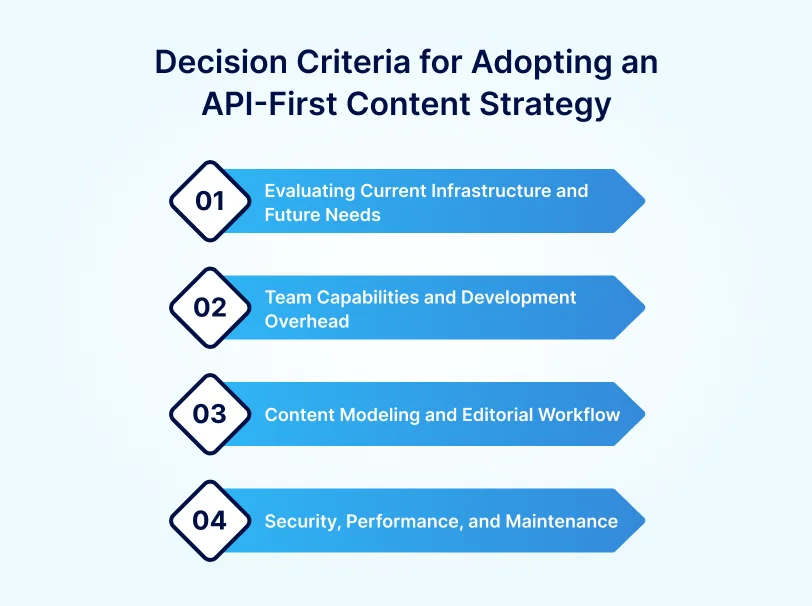
Evaluating Current Infrastructure and Future Needs
Assess your existing content management infrastructure. If you are currently using a monolithic CMS, migrating to a Headless solution requires a strategic plan for content migration and re-architecture. Consider the volume of your content, its complexity, and the number of existing digital channels.
Project your future digital roadmap. Are you planning to launch new mobile apps, expand into international markets with localized content, or integrate with emerging technologies? A Headless CMS is a strong fit if your strategy involves rapid expansion across multiple, diverse platforms. If your needs are limited to a single website with minimal dynamic content, a traditional CMS might still suffice, though it limits future flexibility.
Team Capabilities and Development Overhead
Implementing and managing a Headless CMS requires a development team proficient in API integration and frontend development. Unlike a traditional CMS where content editors might have more direct control over presentation, a Headless setup relies heavily on developers to build and maintain the frontend applications that consume API content.
Evaluate your team's skill set. Do you have developers capable of building and maintaining separate frontends for web and mobile? Are they comfortable working with APIs and modern JavaScript frameworks or native mobile app development kits? While a Headless CMS simplifies content management, it shifts complexity to the frontend development process. The long-term efficiency gains often outweigh the initial learning curve, but this must be factored into resource planning.
Content Modeling and Editorial Workflow
A Headless CMS demands a thoughtful approach to content modeling. Since content is structured independently of presentation, careful planning is needed to define content types, fields, and relationships that will serve all intended frontends. Poor content modeling can lead to inefficiencies or limitations down the line.
Consider your editorial workflow. Content editors will interact with the CMS backend, often through a user-friendly interface. Ensure the chosen Headless CMS provides a robust and intuitive authoring experience that supports your content creation, review, and publishing processes. While the presentation is decoupled, the editorial experience within the CMS itself is paramount for content team productivity.
Security, Performance, and Maintenance
API security is critical. Ensure that the Headless CMS and your API integrations adhere to best practices for authentication, authorization, and data encryption. Performance optimization for API calls and content delivery is also vital to ensure fast loading times for both websites and mobile apps.
Maintenance involves managing API versions, ensuring backward compatibility, and monitoring API performance. While the CMS vendor handles the core content repository, your team is responsible for the frontend applications and their interaction with the APIs. Factor in ongoing maintenance and monitoring costs, as well as potential third-party integrations required for features like search, analytics, or personalization.
Practical Considerations and Tools
When implementing a Headless CMS to synchronize content, several practical aspects and tools can streamline the process.
Choosing the Right Headless CMS
The market offers numerous Headless CMS options, each with different features, pricing models, and target audiences. Popular choices include Strapi, Contentful, Sanity, DatoCMS, and Storyblok. Evaluate them based on:
API Capabilities: Support for REST, GraphQL, webhooks.
Content Modeling: Flexibility in defining content types and relationships.
Developer Experience: SDKs, documentation, community support.
Editorial Experience: Intuitive UI, collaboration features, localization support.
Scalability and Performance: Ability to handle large content volumes and high traffic.
Security: Robust access control and data protection.
Pricing: Cost structure aligned with your usage and budget.
For organizations with complex data structures or specific compliance needs, a self-hosted or open-source option might offer greater control, while SaaS solutions provide ease of management and faster setup.
API Design and Best Practices
Effective API design is fundamental to successful content synchronization. Adhere to principles such as:
Consistency: Maintain consistent naming conventions and data structures across your APIs.
Versioning: Implement API versioning to manage changes without breaking existing frontends.
Documentation: Provide clear, comprehensive API documentation for developers (e.g., OpenAPI/Swagger).
Security: Use OAuth2, API keys, or JWTs for authentication and authorization.
Performance: Optimize API responses, use caching mechanisms, and consider GraphQL for efficient data fetching.
Example of a simple API request for content:
GET /api/v1/articles?slug=how-headless-cms-uses-apisThis request would retrieve a specific article, which can then be rendered on both the website and mobile app.
Frontend Development Frameworks and Libraries
On the frontend, developers will utilize various tools to consume the Headless CMS APIs. For websites, modern JavaScript frameworks are common:
Next.js / Nuxt.js: Excellent for server-side rendering (SSR) or static site generation (SSG) with React/Vue, improving performance and SEO.
Gatsby: Ideal for building fast, secure, static websites that pull data from various sources, including Headless CMS.
React / Vue / Angular: For single-page applications (SPAs) that fetch content dynamically.
For mobile apps, frameworks like React Native or Flutter allow for cross-platform development, using a single codebase to build native-like apps for both iOS and Android. Native development with Swift/Kotlin also directly consumes these APIs.
Webhooks for Event-Driven Updates
Webhooks are a powerful mechanism for real-time content synchronization. When a content item is published, updated, or deleted in the Headless CMS, a webhook can automatically trigger an action in your frontend applications. For instance, a webhook could:
Invalidate a cache on your website.
Trigger a rebuild of a static site.
Send a push notification to mobile app users about new content.
This event-driven approach ensures that content changes are propagated instantly and efficiently, reducing the need for constant polling and improving overall system responsiveness.


Hi, my name is Jaswinder, let's talk about your business needs.
I will do my best to find a reliable solution for you!
Conclusion
The strategic implementation of a Headless CMS, leveraging its API-first architecture, is fundamental for organizations aiming to achieve seamless content synchronization between websites and mobile applications. By decoupling content from its presentation, businesses gain unparalleled flexibility, consistency, and scalability across all digital touchpoints. This approach not only streamlines content management and delivery but also empowers development teams, accelerates time-to-market for new features, and facilitates highly personalized user experiences.
For product leaders and decision-makers, understanding how Headless CMS uses APIs to sync website and mobile app content is not merely a technical detail; it is a critical component of a modern, future-proof digital strategy. It ensures that your content infrastructure can adapt to evolving market demands, support new channels, and maintain a unified brand voice, ultimately driving greater engagement and business value. Investing in an API-driven content platform is an investment in agility, efficiency, and the long-term success of your digital presence.
Frequently Asked Questions
Find answers to the most common questions about Headless CMS Uses APIs to Sync Website & Mobile App Content.
The primary benefits include real-time content synchronization, improved content consistency across platforms, faster development cycles due to decoupled frontends, enhanced scalability for future channels, and greater flexibility for personalized user experiences.
While Headless CMS offers advanced capabilities, it can be beneficial for small businesses if they anticipate future growth, require content consistency across even a few channels, or need flexibility for their tech stack. However, it requires a development-centric approach.
RESTful APIs typically use multiple endpoints to access different resources, often leading to over-fetching or under-fetching of data. GraphQL allows clients to request exactly the data they need from a single endpoint, reducing network calls and improving efficiency, especially for complex data requirements.
Potential challenges include the initial learning curve for content modeling, the need for skilled frontend developers, the complexity of migrating existing content, and ensuring robust API security and performance across all integrated platforms.
RW Infotech specializes in Headless Solutions and Jamstack website development. We can assist your team in selecting and implementing the right Headless CMS, designing robust API architectures, and developing performant frontends for both websites and mobile applications to ensure seamless content synchronization and omnichannel delivery.
News & Insights
We like to share our thoughts on topics we find inspiring. Explore our news and insights.