
Select Your Region
Region-Based Optimized Content
What Is OpenClaw? Automate Business Workflows with AI
Learn what OpenClaw is and how it helps automate business workflows using AI. Improve efficiency, reduce manual tasks, and scale operations easily.


In the evolving landscape of business operations, efficiency and scalability are paramount. Organizations are continually seeking solutions to streamline processes, reduce manual overhead, and enhance productivity. This pursuit often leads to the adoption of advanced automation platforms. Among these, OpenClaw emerges as a powerful AI driven solution designed to automate complex business workflows. Understanding what OpenClaw is and its capabilities provides a strategic advantage for teams aiming to optimize their operational frameworks.
OpenClaw is an intelligent automation platform that leverages artificial intelligence and machine learning to execute tasks, process data, and make informed decisions autonomously. It is engineered to integrate seamlessly across various business functions, providing a unified approach to workflow automation. This article will delve into OpenClaw's core functionalities, strategic implications, and practical applications for businesses looking to achieve significant operational efficiencies.
Understanding OpenClaw: An AI Driven Automation Platform
OpenClaw is not merely a task automation tool; it is a comprehensive platform built for intelligent process automation. At its core, OpenClaw utilizes AI to learn from existing data and operational patterns, enabling it to adapt and improve its automation capabilities over time. This distinguishes it from traditional rule based automation systems, offering a more dynamic and resilient solution for complex business environments.
The platform's architecture is designed for flexibility and scalability, allowing businesses to automate a wide spectrum of workflows from routine administrative tasks to intricate, multi step operational sequences. Its ability to process unstructured data, understand natural language, and interact with diverse systems makes it a versatile asset for modern enterprises. OpenClaw facilitates a shift from reactive problem solving to proactive, automated management of business processes.
Key Features and Core Capabilities
To fully grasp how OpenClaw helps automate business workflows, it is essential to examine its key features:
Intelligent Workflow Automation: OpenClaw enables the design, execution, and monitoring of automated workflows. It can handle conditional logic, parallel processing, and exception handling, ensuring robust automation even for complex processes. This reduces human intervention and speeds up process completion.
Advanced Task Execution: The platform can execute a wide range of tasks, including data entry, report generation, system interactions, and communication triggers. Its AI capabilities allow it to perform these tasks with high accuracy and efficiency, mimicking human decision making where necessary.
Data Processing and Analysis: OpenClaw excels at collecting, processing, and analyzing large volumes of data from disparate sources. It can extract relevant information, perform transformations, and feed insights into business intelligence systems, supporting data driven decision making.
Seamless Integrations: A critical aspect of OpenClaw's utility is its ability to integrate with existing enterprise systems, CRM platforms, ERP solutions, marketing automation tools, and communication channels. This ensures that automation efforts are not siloed but contribute to an interconnected operational ecosystem.
Intelligent Decision Making: Leveraging machine learning algorithms, OpenClaw can learn from historical data to make autonomous decisions within predefined parameters. This capability is particularly valuable for scenarios requiring rapid responses or predictive actions, such as fraud detection or dynamic pricing adjustments.
Natural Language Processing (NLP): OpenClaw incorporates NLP to understand and process human language, enabling it to interact with customers or employees through chatbots, virtual assistants, and email automation, enhancing communication efficiency.
Strategic Implications for Business Operations
The adoption of OpenClaw extends beyond mere task automation; it represents a strategic shift in how businesses approach operational efficiency and resource allocation. For decision makers, understanding these broader implications is crucial for successful implementation and long term value realization.
Enhancing Operational Efficiency and Cost Reduction
One of the primary strategic benefits of OpenClaw is its capacity to significantly enhance operational efficiency. By automating repetitive, time consuming tasks, businesses can reallocate human resources to more strategic, creative, and customer facing roles. This not only boosts productivity but also contributes to substantial cost savings by reducing manual labor hours and minimizing errors.
Consider a scenario in customer support where OpenClaw can automate the initial triage of incoming queries, provide instant answers to FAQs, or route complex issues to the appropriate human agent. This reduces response times, improves customer satisfaction, and lowers the operational costs associated with maintaining a large support team for routine inquiries. The platform's ability to operate 24/7 without fatigue or error further amplifies these efficiency gains.
Improving Accuracy and Compliance
Manual processes are inherently prone to human error, which can lead to significant financial losses, compliance issues, and reputational damage. OpenClaw, with its precise execution and rule based (or AI driven) adherence, drastically reduces the incidence of errors. Whether it's data entry, financial reconciliation, or regulatory reporting, automated workflows ensure consistency and accuracy.
Furthermore, OpenClaw can be configured to enforce compliance with industry regulations and internal policies. By embedding compliance checks directly into automated workflows, businesses can ensure that every process step adheres to required standards, providing an audit trail and reducing the risk of non compliance penalties. This is particularly critical in highly regulated industries such as finance, healthcare, and legal services.
Accelerating Scalability and Agility
For growing businesses, scalability is a constant challenge. Manual processes often become bottlenecks as transaction volumes increase, hindering growth. OpenClaw provides a scalable solution, allowing businesses to handle increased workloads without proportionally increasing headcount or infrastructure. Automated workflows can be easily replicated and scaled up or down based on demand, offering unparalleled agility.
This agility extends to adapting to market changes or new business requirements. With OpenClaw, modifying existing workflows or developing new ones to address evolving needs is faster and less resource intensive than re training human teams or manually re engineering processes. This enables organizations to respond more quickly to competitive pressures and seize new opportunities.
Enabling Data Driven Decision Making
OpenClaw's robust data processing capabilities directly support enhanced data driven decision making. By automating data collection, aggregation, and initial analysis, the platform provides decision makers with timely, accurate, and actionable insights. This moves organizations away from reactive decisions based on outdated information towards proactive strategies informed by real time data.
For example, in sales and marketing, OpenClaw can automate lead scoring, analyze customer behavior patterns, and trigger personalized campaigns. This not only optimizes marketing spend but also provides sales teams with higher quality leads and deeper insights into customer preferences, leading to improved conversion rates and revenue growth. The platform's ability to integrate with analytical tools further enriches this data ecosystem.
Practical Applications and Use Cases for OpenClaw
OpenClaw's versatility allows it to be applied across various departments and industries. Here are some practical examples of how businesses can leverage its capabilities to automate and optimize their operations.
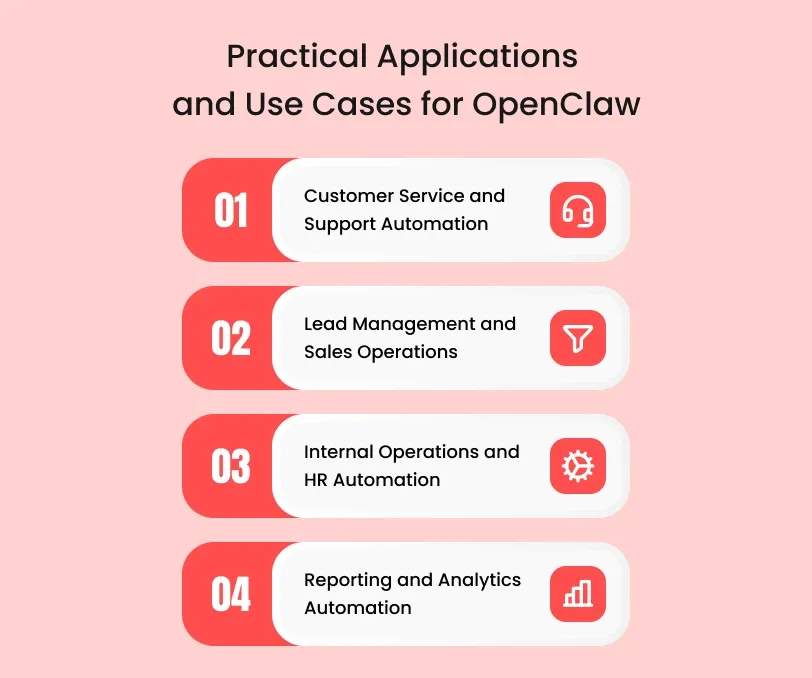
Customer Service and Support Automation
In customer service, OpenClaw can revolutionize how inquiries are managed. It can power AI driven chatbots that handle routine customer questions, provide instant support, and guide users through troubleshooting steps. For more complex issues, OpenClaw can automatically categorize tickets, prioritize them based on urgency or customer value, and route them to the most appropriate human agent with all relevant customer history pre populated. This reduces agent workload, decreases response times, and significantly improves customer satisfaction.
Example: A telecommunications company uses OpenClaw to automate the processing of service requests. When a customer reports an internet outage via chat, OpenClaw's NLP capabilities understand the issue, checks the network status in real time, provides an estimated resolution time, and, if necessary, dispatches a technician without human intervention, all while keeping the customer updated.
Lead Management and Sales Operations
Sales teams often spend considerable time on administrative tasks like lead qualification, data entry, and follow up scheduling. OpenClaw can automate these processes, allowing sales professionals to focus on selling. It can automatically capture leads from various sources (web forms, social media, email), enrich lead data with public information, score leads based on predefined criteria, and assign them to the appropriate sales representative. It can also automate personalized email sequences and schedule follow up activities.
Example: A software company deploys OpenClaw to manage its inbound lead pipeline. OpenClaw automatically extracts contact information from website inquiries, cross references it with CRM data, scores the lead based on industry and company size, and then triggers an automated introductory email. If the lead responds positively, OpenClaw schedules a demo with the relevant sales executive.
Internal Operations and HR Automation
Within internal operations, OpenClaw can streamline numerous HR, finance, and IT processes. For HR, this includes automating onboarding workflows (document collection, system access provisioning, training assignments), leave request approvals, and payroll data processing. In finance, it can automate invoice processing, expense report reconciliation, and financial reporting. For IT, it can manage user access requests, system monitoring, and incident response procedures.
Example: An HR department uses OpenClaw to automate the employee onboarding process. When a new hire is confirmed, OpenClaw automatically creates their user accounts in various systems, sends welcome emails with necessary forms, assigns mandatory training modules, and notifies relevant department heads, ensuring a smooth and compliant onboarding experience.
Reporting and Analytics Automation
Generating regular business reports can be a labor intensive process, often involving manual data extraction, aggregation, and formatting. OpenClaw can fully automate this by connecting to various data sources (databases, APIs, spreadsheets), extracting relevant metrics, performing calculations, and generating customized reports in desired formats (e.g., PDF, Excel, dashboards). These reports can then be automatically distributed to stakeholders on a scheduled basis.
Example: A marketing agency utilizes OpenClaw to automate weekly client performance reports. OpenClaw pulls data from Google Analytics, Facebook Ads, and CRM, compiles it into a branded report template, adds commentary based on predefined rules, and emails it to each client every Monday morning, saving dozens of hours of manual work.


Hi, my name is Jaswinder, let's talk about your business needs.
I will do my best to find a reliable solution for you!
Decision Criteria for Implementing OpenClaw
Implementing an advanced automation platform like OpenClaw requires careful consideration of various factors. Decision-makers should evaluate their current operational landscape, strategic objectives, and available resources.
Identifying Automation Opportunities
The first step is to identify processes that are good candidates for automation. Look for tasks that are:
Repetitive and High Volume: Tasks performed frequently and consistently.
Rule Based or Predictable: Processes with clear, unambiguous steps or those where AI can learn patterns effectively.
Prone to Error: Manual processes where mistakes are common and costly.
Time Consuming: Tasks that consume significant human effort but add limited strategic value.
Requiring System Integration: Processes that involve data transfer or interaction across multiple disparate systems.
Prioritize processes that offer the highest potential ROI in terms of cost savings, efficiency gains, and improved accuracy.
Assessing Integration Requirements and Ecosystem Fit
OpenClaw's strength lies in its integration capabilities. Before implementation, conduct a thorough assessment of your existing technology stack. Identify all systems that need to interact with OpenClaw, including CRM, ERP, marketing automation, communication platforms, and custom applications. Ensure that OpenClaw offers robust APIs or connectors for these systems. A seamless integration minimizes disruption and maximizes the value of automation.
Considering Data Security and Governance
Automating workflows often involves processing sensitive business and customer data. It is crucial to evaluate OpenClaw's data security features, compliance certifications, and data governance policies. Ensure that the platform adheres to industry standards (e.g., GDPR, HIPAA) and your organization's internal security protocols. Understand how data is stored, transmitted, and protected within the OpenClaw environment.
Evaluating Long Term Scalability and Maintenance
While OpenClaw offers inherent scalability, consider the long term implications for your organization. How easily can new workflows be developed and deployed? What are the maintenance requirements for automated processes? Will your internal teams have the necessary skills to manage and optimize OpenClaw, or will external expertise be required? Factor in potential training costs and the need for ongoing support to ensure the solution remains effective as your business evolves.
Conclusion
What OpenClaw is, at its core, is an intelligent automation platform designed to empower businesses to transcend traditional operational limitations. By leveraging AI and machine learning, OpenClaw facilitates the automation of complex workflows, from customer service and sales operations to internal HR and financial processes. Its ability to enhance efficiency, improve accuracy, accelerate scalability, and enable data driven decision making positions it as a critical tool for modern enterprises striving for operational excellence.
For organizations looking to optimize their day to day workflows, reduce manual effort, and unlock new levels of productivity, OpenClaw offers a robust and adaptable solution. Strategic implementation, guided by a clear understanding of its capabilities and a thoughtful assessment of business needs, will yield significant returns. By embracing intelligent automation, businesses can free up valuable human capital, minimize errors, and build more agile, resilient operations prepared for future growth.
RW Infotech specializes in helping businesses navigate the complexities of AI automation and digital transformation. Our expertise in full stack development, performance optimization, and custom AI solutions positions us to assist your team in evaluating, integrating, and optimizing platforms like OpenClaw to achieve your strategic objectives and streamline your business workflows effectively.
Frequently Asked Questions
Find answers to the most common questions about What Is OpenClaw and How It Helps Automate Business Workflows.
Businesses of all sizes can benefit, especially those with repetitive, high-volume tasks, complex data processing needs, or a strong desire to improve operational efficiency, accuracy, and scalability across departments like customer service, sales, marketing, HR, and finance.
OpenClaw is designed for seamless integration. It offers robust APIs and connectors to interact with a wide range of existing enterprise systems, CRM platforms, ERP solutions, and communication channels, minimizing disruption during implementation.
OpenClaw incorporates advanced security features and can be configured to adhere to various compliance standards (e.g., GDPR, HIPAA). It provides secure data handling, access controls, and audit trails to ensure data integrity and regulatory compliance.
Yes, OpenClaw is highly configurable and can be customized to meet specific industry requirements and unique business processes. Its modular architecture allows for tailored workflow design and integration with specialized applications relevant to particular sectors.
RW Infotech offers expert consultation, integration services, and custom development to help your business effectively implement and optimize OpenClaw. We can assist with workflow design, system integration, AI model training, and ongoing support to ensure maximum value from your automation investment.
News & Insights
We like to share our thoughts on topics we find inspiring. Explore our news and insights.
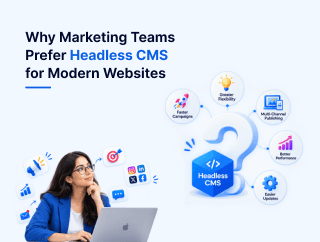
Why Marketing Teams Prefer Headless CMS for Modern Websites
Learn how headless CMS helps marketing teams manage content independently, launch campaigns faster, improve collaboration, personalize customer experiences, and deliver content across multiple channels.
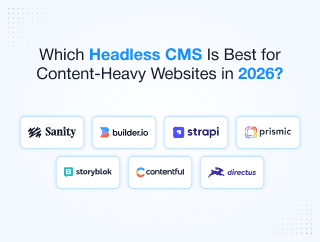
Which Headless CMS Is Best for Content-Heavy Websites in 2026?
Discover the best headless CMS platforms for content-heavy websites in 2026. Compare Sanity, Strapi, Contentful, Storyblok, Directus, and other leading options.