
Select Your Region
Region-Based Optimized Content
Next.js 16.3.4: What’s New and What Developers Need to Know
Explore Next.js 16.3.4 updates, bug fixes, performance improvements, security changes, and key considerations for upgrading existing applications.


Next.js continues to evolve as a foundational framework for modern web applications, driving performance and developer experience. Each release brings incremental yet significant changes that impact how applications are built, deployed, and maintained. Next.js 16.3.4, while a patch release, consolidates stability, addresses critical issues, and refines existing features, making it an important checkpoint for development teams.
This article provides a practical overview of Next.js 16.3.4, focusing on the updates and considerations that developers, product leaders, and decision-makers need to understand. We will examine the implications for existing projects, new developments, and the strategic advantages of staying current with the framework.
Understanding Next.js Patch Releases and Their Impact
Patch releases in a framework like Next.js are typically focused on bug fixes, minor performance enhancements, and security updates, rather than introducing major new features. Next.js 16.3.4 follows this pattern, building upon the significant architectural shifts introduced in earlier Next.js 16 versions, particularly around React Server Components (RSC) and the App Router.
For development teams, understanding the nature of a patch release is crucial. While it generally implies lower risk compared to a major version upgrade, it still necessitates careful review of changelogs, potential regressions, and compatibility with existing dependencies. These releases are vital for maintaining application stability, security posture, and leveraging the latest optimizations without requiring extensive refactoring.
Key Updates in Next.js 16.3.4
Next.js 16.3.4 primarily addresses stability and performance issues identified since its preceding minor versions. While specific detailed changelogs for patch releases can be granular, the focus generally falls into several categories:
Stability and Bug Fixes
A primary goal of patch releases is to resolve critical bugs that might affect application reliability or user experience. This often includes fixes related to:
React Server Components (RSC) Interactions: Refining how server and client components interact, particularly regarding data fetching, state management, and hydration. Bugs in this area can lead to unexpected client-side behavior or rendering issues.
App Router Stability: Addressing edge cases and inconsistencies within the App Router, which is the foundation for RSC. This can include fixes for navigation, caching, and parallel routes that improve the robustness of complex routing scenarios.
Development Server Reliability: Enhancements to the development server often involve fixing hot module reloading (HMR) issues, improving error reporting, and ensuring consistent behavior during development.
For teams, these fixes mean a more predictable development environment and more stable production applications. Reduced debugging time and fewer production incidents are direct benefits.
Performance Improvements
Even in patch releases, Vercel and the Next.js community often integrate minor performance enhancements. These are typically optimizations that don't require breaking changes but contribute to faster load times and smoother user interactions. Examples include:
Bundle Size Optimizations: Improvements in how Next.js bundles client-side code, potentially leading to slightly smaller JavaScript payloads.
Build Time Enhancements: Incremental improvements to the build process, which can reduce the time it takes to compile and deploy applications, especially for large projects.
Caching Mechanism Refinements: Tweaks to the HTTP and data caching strategies can lead to more efficient data revalidation and faster subsequent page loads.
While individual gains might be small, cumulative performance improvements across releases contribute significantly to overall application responsiveness and SEO.
Security Updates
Security is a continuous concern for any web framework. Patch releases often include fixes for newly discovered vulnerabilities or improvements to existing security measures. These can range from dependency updates to addressing specific attack vectors within the Next.js runtime or build process.
Teams should prioritize applying security patches promptly to mitigate risks. Neglecting these updates can expose applications to known vulnerabilities, leading to data breaches or service disruptions. Regular updates are a fundamental aspect of a robust security posture.
Developer Experience Enhancements
Minor adjustments that improve the developer experience (DX) are also common. These might include:
Improved Error Messages: More descriptive error messages can help developers diagnose and resolve issues faster, especially when working with new features like RSC.
Tooling Integrations: Better compatibility with popular development tools, linters, or IDE extensions.
Documentation Clarifications: While not code changes, updates to documentation often accompany patch releases to clarify usage patterns or best practices.
A smoother DX translates directly into increased developer productivity and reduced friction during the development lifecycle.
Impact on Existing Applications and Upgrade Considerations
Upgrading to Next.js 16.3.4 from an earlier 16.x version should generally be straightforward due to its patch nature. However, certain considerations remain pertinent for teams:
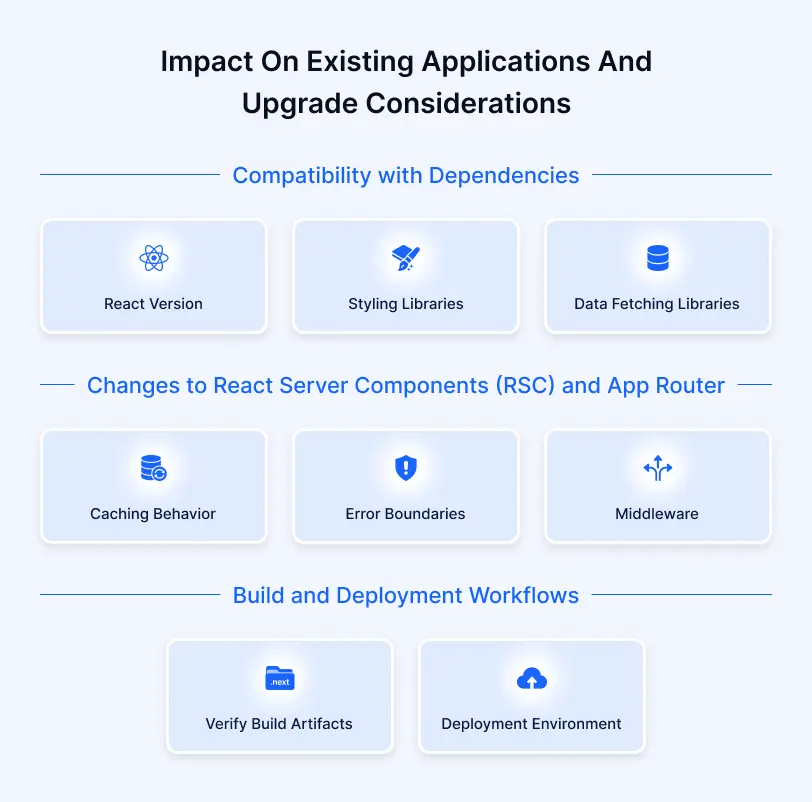
Compatibility with Dependencies
Even minor Next.js updates can sometimes expose incompatibilities with third-party libraries, especially those that deeply integrate with Next.js's rendering or routing mechanisms. Before upgrading, check:
React Version: Ensure your project's React version is compatible with Next.js 16.3.4.
Styling Libraries: Libraries like Emotion or Styled Components might have specific integration patterns that occasionally require minor adjustments.
Data Fetching Libraries: If you use libraries like SWR, React Query, or Apollo Client, verify their compatibility, particularly if they interact with the App Router or RSC.
A comprehensive test suite is invaluable here to catch regressions early.
Changes to React Server Components (RSC) and App Router
The App Router and React Server Components are still relatively new paradigms. Patch releases often refine their behavior, fixing edge cases or improving stability. While Next.js 16.3.4 is unlikely to introduce breaking changes to these core concepts, teams should be aware of potential subtle behavioral shifts:
Caching Behavior: The caching mechanisms for RSC and data fetching might see minor adjustments. Understand how
fetchrequests are cached and revalidated, especially if you rely on specificrevalidateoptions.Error Boundaries: Ensure your error boundaries are robust and correctly capture errors within RSC and client components, as error handling can be nuanced in the new architecture.
Middleware: Review any custom middleware for compatibility, as the execution context might have minor refinements.
For applications heavily leveraging the App Router, thorough testing of critical user flows is essential.
Build and Deployment Workflows
The build process in Next.js 16.3.4 should remain largely consistent. However, teams using custom build scripts or complex CI/CD pipelines should:
Verify Build Artifacts: Confirm that the generated build artifacts (e.g.,
.nextfolder) are as expected and compatible with your deployment environment.Deployment Environment: Ensure your hosting provider (e.g., Vercel, Netlify, AWS Amplify) fully supports the latest Next.js versions. While most providers quickly adapt, specific configurations might need review.
Automated deployment pipelines should include a staging environment for validation before pushing to production.
Should You Upgrade to Next.js 16.3.4?
For most teams, upgrading to Next.js 16.3.4 is a recommended step. Patch releases are designed to enhance stability and security without introducing significant migration overhead. Here’s a decision framework:
For New Projects: Always start with the latest stable version of Next.js. This ensures you benefit from all the latest bug fixes, performance improvements, and security patches from day one.
For Existing Projects on Next.js 16.x: An upgrade is highly advisable. The benefits of improved stability, security, and minor performance gains generally outweigh the minimal risks associated with a patch release. Prioritize this if your application has encountered issues that the changelog indicates have been resolved.
For Projects on Older Next.js Versions (e.g., Next.js 15 or earlier): Upgrading directly to Next.js 16.3.4 might be part of a larger, more complex migration strategy. The jump from older versions to Next.js 16 involves significant architectural changes (App Router, RSC), which require careful planning, extensive testing, and potentially significant refactoring. In this scenario, consider a phased approach rather than a direct jump.
Checklist Before Upgrading Production Applications:
Review the Official Changelog: While this article provides a general overview, always consult the official Next.js changelog for the precise details of 16.3.4.
Update Dependencies: Ensure all your project's dependencies are updated to their latest compatible versions.
Run All Tests: Execute your full unit, integration, and end-to-end test suites. This is your primary safeguard against regressions.
Staging Environment Deployment: Deploy the updated application to a staging or pre-production environment. Conduct thorough manual testing of critical user flows.
Monitor Performance and Logs: After deploying to staging, monitor application performance, error logs, and resource usage for any anomalies.
Backup Your Project: Before initiating any major upgrade, ensure your project codebase is backed up.


Hi, my name is Jaswinder, let's talk about your business needs.
I will do my best to find a reliable solution for you!
Long-Term Implications of Staying Updated
Maintaining an up-to-date Next.js application offers several strategic advantages for businesses and development teams:
Enhanced Security Posture: Regular updates mean your application is protected against the latest known vulnerabilities, reducing the risk of security breaches and maintaining user trust.
Improved Performance and User Experience: Each release often brings optimizations that contribute to faster load times, smoother interactions, and overall better performance. This directly impacts user satisfaction, conversion rates, and SEO rankings.
Access to Latest Features and APIs: While patch releases don't introduce major features, staying current positions your team to easily adopt new capabilities when they arrive in minor or major versions. This keeps your application modern and competitive.
Simplified Maintenance and Reduced Technical Debt: Proactively applying updates prevents the accumulation of significant technical debt. Large, infrequent upgrades are often more complex, time-consuming, and resource-intensive.
Better Developer Experience and Productivity: Developers benefit from improved tooling, clearer error messages, and a more stable development environment, leading to increased productivity and job satisfaction.
Long-Term Support and Community: Staying on supported versions ensures you have access to community support, official documentation, and timely bug fixes. Older versions eventually reach end-of-life, making it harder to find solutions to issues.
For product leaders and decision-makers, these factors translate into a more resilient, performant, and cost-effective digital presence. Investing in regular updates is an investment in the longevity and success of your digital products.
Conclusion
Next.js 16.3.4, while a patch release, plays a crucial role in stabilizing the Next.js ecosystem, particularly around the App Router and React Server Components. For most teams already on Next.js 16.x, upgrading is a low-risk, high-reward decision that reinforces application stability, security, and performance. For those on older versions, it serves as a reminder of the continuous evolution of the framework and the strategic benefits of maintaining a modern technology stack.
At RW Infotech, we specialize in building and optimizing high-performance web applications using modern frameworks like Next.js. Our expertise in Headless Solutions, Jamstack development, and performance optimization ensures that your Next.js applications are not only up-to-date but also architected for scalability, security, and an exceptional user experience. Whether you need assistance with a Next.js upgrade, a new project build, or ongoing maintenance, our team provides the strategic guidance and technical execution to keep your digital platforms competitive.
Frequently Asked Questions
Find answers to the most common questions about Next.js 16.3.4: What’s New and What Developers Need to Know.
Next.js 16.3.4 primarily focuses on stability, bug fixes, and minor performance enhancements, particularly for the App Router and React Server Components, without introducing new major features.
If your application is already on Next.js 16.x, upgrading is generally recommended after thorough testing in staging, as it enhances stability and security. For older Next.js versions, plan a more comprehensive migration.
As a patch release, Next.js 16.3.4 is not expected to introduce breaking changes. Its purpose is to fix issues and improve existing functionality within the 16.x series.
Staying updated with Next.js ensures better security, improved performance, access to the latest optimizations, simplified maintenance, and a superior developer experience, contributing to a more resilient and competitive digital product.
RW Infotech offers expertise in Next.js development, Headless CMS migrations, performance optimization, and full-stack development. We can provide strategic guidance and technical implementation for safe upgrades, new project builds, and ongoing maintenance of your Next.js applications.
News & Insights
We like to share our thoughts on topics we find inspiring. Explore our news and insights.